

Ongoing research

CAR-T cell therapy for severe autoimmune disease

This is the programme the lab is actively running today. It is one strand of a broader immunological thesis — not the whole of our research — and it is preclinical. Nothing described here is an approved therapy or an active clinical trial.

Programme

CAR-T cell therapy for autoimmune disease

Stage

Discovery / preclinical — in vitro

Setting

Donor-derived primary human cells

Status

Active — the lab's current focus

Workstreams

How the programme is broken down

Four workstreams, each with its own methods and its own stopping condition. A construct only moves forward when the endpoint below is met and documented.

Workstream 01

In progress

Receptor design and construct selection

We evaluate chimeric antigen receptor architectures adapted from oncology for autoimmune indications, where the target is a pathogenic B-cell or T-cell population rather than a tumour. Selection is driven by specificity and controllability, not by raw potency.

Methods

  • Construct libraries screened for antigen specificity
  • Hinge and costimulatory domain comparisons
  • Transduction efficiency across donor variability

Endpoint

A shortlist of constructs with reproducible target engagement across at least three independent donors.
Workstream 02

In progress

Safety and controllability

Autoimmune patients are not oncology patients: the tolerance for toxicity is far lower. This workstream characterises the failure modes of each candidate construct before anything else advances.

Methods

  • Cytokine release profiling in co-culture
  • On-target / off-tissue modelling against healthy-cell panels
  • Engineered kill-switch and dose-control evaluation

Endpoint

Documented safety envelope and a functioning shutdown mechanism for every advancing construct.

Workstream 03

Early

Mechanism and persistence

A construct that works without an explanation is not a result we act on. We use single-cell readouts to describe why a candidate behaves as it does, and how long that behaviour lasts.

Methods

  • Single-cell transcriptional profiling of expansion and exhaustion
  • Memory phenotype tracking over extended culture
  • Orthogonal validation of each key finding

Endpoint

A mechanistic account of persistence that survives replication by a second method.

Workstream 04

Scoping

Manufacturing feasibility

Early scoping of whether a promising construct could realistically be produced at a scale and cost that reaches patients, before we invest further in it.

Methods

  • Vector-free delivery feasibility assessment
  • Process step and cost-of-goods mapping
  • Release-assay requirements gathering

Endpoint

A go / no-go feasibility memo per advancing construct.

Programme status

Where the work stands

We publish stage honestly, including what has not started. There are no dates attached to future phases because the data decides the pace.

  1. Completed

    Assay infrastructure established

    Co-culture, cytometry and cytokine readouts standardised and validated against known controls.

  2. Current

    Construct screening and safety characterisation

    Workstreams 01 and 02 running in parallel across donor-derived primary cells.

  3. Next

    Mechanistic depth on shortlisted constructs

    Single-cell profiling scaled to the candidates that clear the safety envelope.

  4. Later

    Independent replication with partners

    Shortlisted results handed to collaborating academic groups for external reproduction.

Open questions

What we do not yet know

  • 01

    Does depletion of a pathogenic lymphocyte population produce durable remission, or transient relief followed by reconstitution of the same pathology?

  • 02

    Can controllability be engineered in without compromising the persistence that makes the approach work at all?

  • 03

    Which immune profiles predict response, and can we identify them before treatment rather than after?

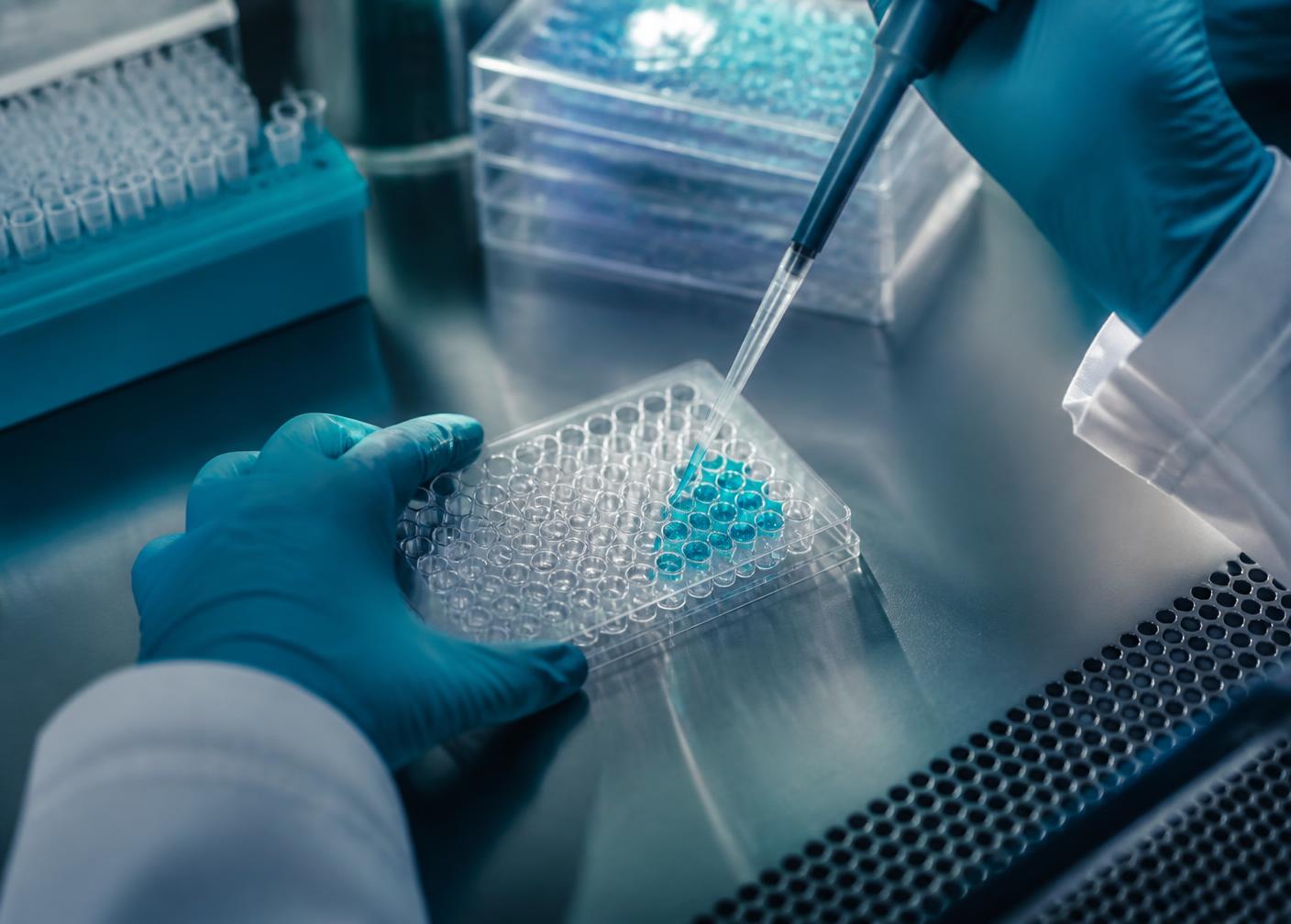
Gloved hands of a researcher preparing samples in a multi-well plate

This is one programme. See the wider research thesis.

CAR-T is our most active line of work, alongside precision diagnostics and immune restoration research.